

Hi! My name is Clara.
Throughout my entire life, I have had four professional loves: the ocean, dirty work, dialogue, and travel. Together, they have shaped my Husky experience—one rooted in community, grounded in place, and expanded through interdisciplinary learning. Across environments and cultures, I have learned that meaningful leadership begins with listening, that discovery thrives on collaboration, and that science is most powerful when connected to people and the places they inhabit.
Total Word Count: 1,162
 |
|---|
 |
 |
 |
 |
 |
 |
 |
 |
 |
 |
 |
 |
Join me as I move across places that have shaped how I learn, lead, and belong!

NEW ORLEANS
My college journey has both its precursor and continuation in my hometown of New Orleans. For more than seven years, my work at Grow Dat Youth Farm has shaped my understanding of leadership and inclusivity. While hand-cultivating carrots and washing bok choy, I learned the value of dirty work—labor that grounds you in place and in community. Through long conversations with peers and advisors, I learned how to listen across differences and build relationships rooted in mutual respect, both with people and with the land itself.


Grow Dat was also where I found space to embrace my identity as a queer woman. That sense of belonging profoundly shaped how I show up in community and inspired me to foster similar spaces at the University of Washington. At UW, I served on the College of the Environment Inclusive Excellence Committee and mentor students through the Interdisciplinary Honors Peer Mentoring Program. In these roles, I work to ensure that academic spaces are not only rigorous but humane, places where dialogue is recognized as a shared responsibility and a form of knowledge in its own right.
My time at Grow Dat also ignited my passion for ecology, conservation, and restoration, leading to my minor in Ecological Restoration at UW. I continue to engage in hands-on learning by volunteering at the UW Farm each quarter, staying connected to the physical labor and communal learning that first taught me how growth happens—slowly, collaboratively, and with care.


BERMUDA
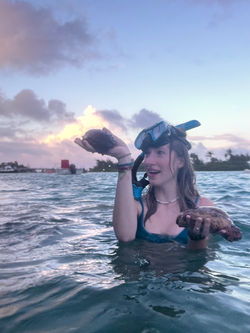
After an immensely challenging freshman year marked by academic self-doubt, I hesitantly applied to study Tropical Marine Ecology at the Bermuda Institute of Ocean Sciences. That summer became a turning point. Immersed in coral reefs and mangrove ecosystems, I rediscovered confidence through curiosity. I learned that fear often signals deep passion, and that growth comes from leaning into challenges rather than retreating from them.


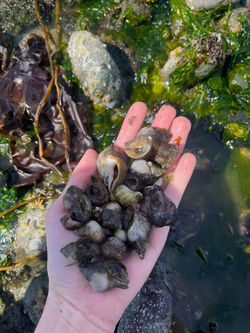
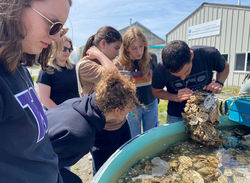
In Bermuda, I began to understand travel not as movement, but as immersion. Learning alongside local scientists and community members reshaped how I viewed discovery—not as isolated research, but as a conversation between ecosystems and the people who depend on them. That experience guided my return to UW, where I pursued an internship with the Mangrove Action Project in Seattle. There, I combined fieldwork on marine invertebrates with research on community-based restoration, examining how conservation succeeds when local knowledge leads.
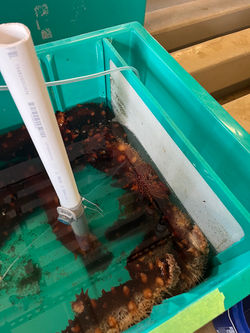
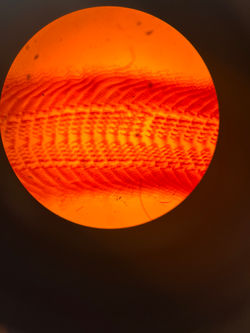
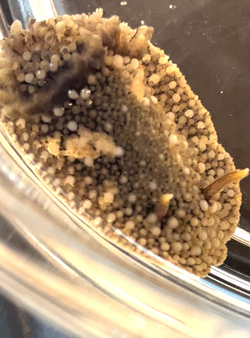
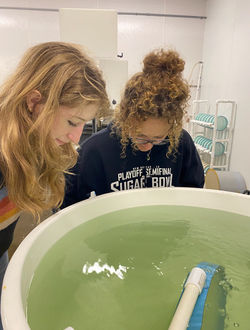
Speaking with Bermudian and Seattle-based communities, I saw how dialogue deepens scientific understanding. Through coursework in restoration ecology and collaborative research, I learned to translate complex ecological challenges into accessible, community-driven solutions. From exploring the Burke Museum’s malacology collections to attempting sea cucumber spawning and building ocean sensors, I immersed myself in interdisciplinary work that reinforced a core lesson: science flourishes when curiosity is shared.


 |  |  |  |
|---|---|---|---|
 |  |  |  |
 |  |  |  |
 |  |  |  |

SEATTLE
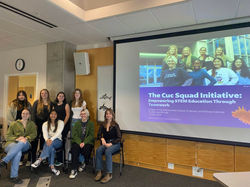
Back at UW, I carried these lessons into campus leadership. I currently serve as Co-Chair of the Student Advisory Council to the Dean of the College of the Environment and as Co-Chair of the Campus Sustainability Fund Committee. Working closely with the Dean’s Office, I represent the Marine Biology Department, facilitate council meetings, and help guide conversations around cross-college collaboration, budget priorities, and the integration of diversity, equity, and inclusion into academic decision-making.
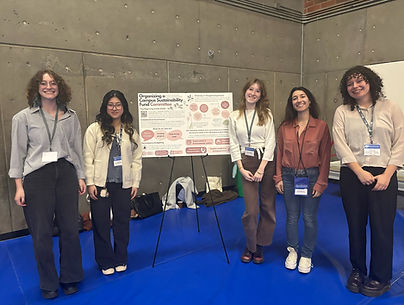
As Co-Chair of the Campus Sustainability Fund Committee, I review and evaluate student-led grant proposals, contribute to the development of the University’s new Sustainability Action Plan, and support environmental and cultural sustainability initiatives across campus. In both roles, I serve as a bridge between students, faculty, and administrators—ensuring that student voices are heard and that complex sustainability challenges are translated into actionable, community-centered decisions. Grounded in the facilitation skills I developed through years of dialogue-based work, I approach governance not as authority, but as collaboration.
On a daily basis, much of my time is spent at the front desk of the College of the Environment Dean’s Office, where I work as a student assistant supporting our outreach and student ambassador program. In this role, I have had the pleasure of connecting with both current and prospective students, facilitating conversations about my own and our ambassadors’ Husky experiences. From leading large campus tours to drawing stickers at the desk, I have been able to transform my once-anxious freshman-year experiences into meaningful learning moments for myself and others, reinforcing my belief that connection with peers is one of the most vital academic resources.






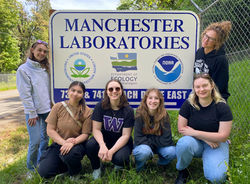
I have also engaged deeply in collaborative research through Friday Harbor Laboratories and King County Government, contributing to a study of the Brightwater Treatment Facility outfall pipe. By painstakingly analyzing over 800 images of marine habitats, my team assessed the ecological value of human-made structures in Puget Sound. Contributing to a report for state legislators and preparing a manuscript for publication showed me how research can directly inform public policy and how collaboration amplifies impact. Presenting our findings at the Undergraduate Research Symposium further affirmed that scientific discovery is as much about human connection as data.


SAMOS
This past summer, my journey culminated in completing my senior thesis at the Archipelagos Institute of Marine Conservation in Samos, Greece. There, my four professional loves converged. Each day, I worked with my hands deep in Mediterranean seagrass beds, learning alongside mentors and peers from across the globe. Supported by the Mary Gates Research Scholarship and the skills I developed at UW, I engaged in inclusive, interdisciplinary research grounded in both place and community. I continue to work with Archipelagos and my UW mentor to prepare both an academic publication and a publicly accessible version of our research.


THE FUTURE
It’s impossible to pinpoint just a few moments that define my Husky experience. From New Orleans to Seattle, Bermuda to Samos, each place has asked something different of me and offered new ways to understand connection, as every community, place, and challenge has shaped who I am today. UW has taught me that leadership is rooted in listening, discovery is fueled by curiosity, and progress is only possible through collaboration.
As I look ahead to pursuing graduate study in marine ecology and conservation, I remain committed to research that serves both ecosystems and communities. Whether I am working in marine environments, doing hands-on fieldwork, engaging in dialogue across difference, or learning from new places, I carry forward the values shaped by the Husky community—ready to make a meaningful, connected impact wherever I go.